
Prop Trading Career in Nigeria: Market Reality, Income Potential, and Long-Term Outlook
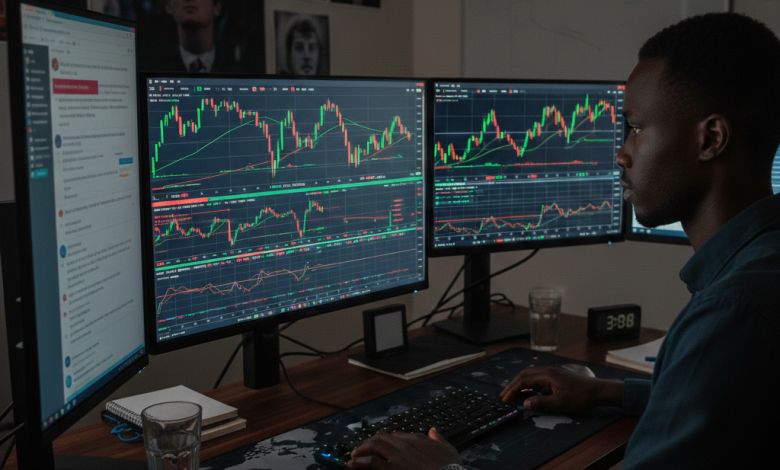
In recent years, Nigeria has quietly become one of Africa’s most active retail trading markets. What began as interest in forex and crypto speculation has evolved into something more structured: a growing number of Nigerian traders are now pursuing a prop trading career through international prop firms.
The appeal is obvious. Instead of risking personal savings in a volatile economy, traders can attempt to qualify for a funded account and manage larger capital while keeping a share of the profits. But while the opportunity is real, so are the risks. Building a sustainable prop trading career in Nigeria requires far more than passing a challenge. It requires discipline, capital planning, and an understanding of how the global prop industry actually works.





The Trading Landscape in Nigeria
Nigeria has one of the youngest populations in the world, with a median age under 19. Youth unemployment remains high, and digital entrepreneurship has become an attractive alternative to traditional employment. Trading — especially forex and crypto — fits naturally into this environment.
Estimates suggest that hundreds of thousands of Nigerians actively participate in forex trading. The country consistently ranks among the global leaders in cryptocurrency adoption, with strong peer-to-peer transaction volumes. Dollar-denominated income opportunities are particularly attractive due to the volatility of the naira and recurring foreign exchange pressures in the local economy.
For many young professionals, trading is not viewed as gambling, but as a potential profession. This is where prop trading firms enter the picture.
Why Prop Firms Attract Nigerian Traders
The primary reason is access to capital.
In a country where average monthly income can be relatively modest compared to global markets, building a large personal trading account may take years. Prop firms offer a shortcut: pass an evaluation, receive a funded account, and trade significantly larger capital while keeping a percentage of the profits.
Another important factor is currency exposure. Most prop firms operate in USD or EUR. Earning in hard currency provides a hedge against local currency depreciation, which makes prop trading particularly appealing in Nigeria.
There is also a psychological factor. Many traders see prop firms as a structured environment with defined rules. Instead of trading emotionally with personal savings, they operate under risk parameters that can, in theory, promote discipline.
However, this structure does not eliminate risk. It shifts it.
The Reality of Success Rates
The global statistics for prop trading are sobering. A large percentage of traders fail evaluation challenges. Industry estimates suggest that only a small fraction of participants successfully reach consistent payouts. Many traders attempt multiple challenges before passing, which increases their total cost of participation.
This is especially relevant in Nigeria, where disposable income may be limited. Challenge fees paid in dollars can represent a significant financial commitment. Without preparation, repeated attempts can quickly become expensive.
The idea that prop trading is an easy path to financial freedom is misleading. It is closer to performance-based contracting: strict rules, tight drawdown limits, and constant evaluation.
How a Prop Trading Career Actually Develops
A realistic prop trading career in Nigeria usually follows several stages.
It begins with skill development. Serious traders spend months testing strategies on demo accounts, studying risk management, and understanding market structure. Without this foundation, the probability of passing an evaluation is low.
The second stage is the evaluation phase. Here, traders must demonstrate consistency while staying within maximum drawdown and daily loss limits. This stage tests not only strategy but psychological control. Many Nigerian traders struggle here because the pressure to earn quickly can lead to over-leveraging.
Once a trader secures a funded account, the mindset must shift again. The goal is no longer to pass a test but to build payout history. Professional prop traders focus on stability. Modest, consistent returns are more sustainable than aggressive growth attempts.
Over time, experienced traders diversify. Some operate with multiple prop firms to reduce dependency on one provider. Others gradually build personal trading capital alongside their funded accounts. The long-term objective is financial independence, not permanent reliance on prop firms.
Economic Considerations for Nigerian Traders
There are several local factors that influence a prop trading career in Nigeria.
First, payment infrastructure. Not all international prop firms support direct local banking withdrawals. Traders often rely on digital payment processors or crypto withdrawals, which adds an operational layer that must be managed carefully.
Second, regulation. Nigeria does not currently have a dedicated regulatory framework for retail prop trading. Most firms Nigerian traders work with are offshore entities. This means due diligence is essential before paying any challenge fee.
Third, cost planning. On average, traders globally spend multiple challenge fees before reaching profitability. For a Nigerian trader, this could represent several months of income. Without strict budgeting, the financial pressure can negatively affect performance.
Income Expectations and Sustainability
Many beginners assume that a $100,000 funded account automatically translates into large income. In reality, professional traders often generate moderate monthly returns. Consistency matters more than size.
A trader who produces steady returns while respecting drawdown limits can build a long-term relationship with a firm. But even successful prop traders typically scale gradually. The income is performance-based, irregular, and dependent on market conditions.
For Nigerians considering this path, it is crucial to treat prop trading as a performance profession rather than a guaranteed salary replacement.
The Long-Term Outlook for Prop Trading in Nigeria
The growth of digital finance in Nigeria suggests that interest in prop firms will continue expanding. With increasing internet penetration and mobile accessibility, more individuals are gaining exposure to global markets.
At the same time, the global prop industry has experienced consolidation and firm closures in recent years. This makes careful firm selection and risk awareness more important than ever.
The traders who succeed in building a prop trading career in Nigeria tend to share similar characteristics: disciplined risk management, patience, realistic expectations, and a long-term mindset.
Final Perspective
A prop trading career in Nigeria is possible, but it is not simple. It requires preparation, capital discipline, emotional control, and a clear understanding of how prop firms operate.
For Nigerian traders, the opportunity lies in leveraging global capital access while managing local economic realities wisely. The goal should not be fast profits, but steady professional growth.
Prop firms can open the door. What determines success is how responsibly that opportunity is handled.